

Soldiers: Heroes of World War II

Soldiers: Heroes of World War II

Soldiers: Heroes of World War II established Best Way as a notable game developer and a pioneer of real-time tactics while giving rise to the GEM engine.

Overview

More Than a Game

Released in 2004, Soldiers combined real-time tactical command with the ability to take direct control of individual soldiers, weapons, and vehicles. Its systemic gameplay, physics simulation, and highly interactive, destructible environments gave players an unusual degree of freedom and established a new benchmark for World War II tactical games.

Behind the game was an equally ambitious technological project. Best Way began without an established engine or a proven blueprint for the experience it wanted to create. The team developed the game and its underlying technology in parallel, building new systems as its experimental gameplay model took shape.

The result was not only Best Way’s first commercial game, but also GEM1: the technological foundation for the studio’s future tactical games, third-party projects, and subsequent generations of the GEM engine.

Watch the trailer
Features

How Soldiers plays

DIRECT CONTROL

DIRECT CONTROL

Take direct control of any unit under your command, from infantry and artillery to tanks and boats. Move, aim, and fire with precision

Gameplay screenshot of a WWII RTS: tanks, explosions and infantry combat around a village with rusting industrial silos, rendered with the GEM1 engine

FLEXIBLE MISSION APPROACHES

Choose how to complete each objective. Sneak past patrols, set an ambush, or launch a direct assault as the situation demands

DESTRUCTIBLE ENVIRONMENTS

DESTRUCTIBLE ENVIRONMENTS

Break through walls, demolish buildings, and destroy enemy cover. As the battlefield changes, new routes open up and once-safe positions become exposed

COMPONENT-BASED VEHICLE DAMAGE

COMPONENT-BASED VEHICLE DAMAGE

Damage individual vehicle components to change what a vehicle can do. Disable its tracks to stop it in place or knock out its gun to take away its firepower.

VEHICLE CAPTURE AND REPAIR

VEHICLE CAPTURE AND REPAIR

Capture enemy vehicles, repair damaged equipment, and put it back into action under your command.

INDIVIDUAL UNIT SIMULATION

INDIVIDUAL UNIT SIMULATION

Every unit is simulated individually, with its own inventory, field of vision, and hearing. Units react to enemy activity based on what they can see and hear.

More game features

  • A combination of real-time strategy, tactical simulation, stealth, and direct action
  • Оver 100 historically authentic military units, including tanks, vehicles, artillery, and boats
  • 32 missions across American, British, Soviet, and German campaigns
  • Simulated projectile behavior and battlefield visibility
  • Physics-driven movement, collisions, and combat
  • Single-player, cooperative, and competitive multiplayer gameplay
  • Modding support and built-in development tools
Gameplay

Tactical Freedom on the Battlefield

Each battle in Soldiers: Heroes of World War II tests the player’s tactical thinking, planning, and ability to adapt when a plan fails.

Players can command their units from a top-down perspective using traditional point-and-click controls or switch to Direct Control to operate individual soldiers, weapons, or vehicles themselves.

Resources are limited, reinforcements are rarely available, and battlefield equipment can become essential to survival. Players can collect weapons and ammunition, capture enemy vehicles, repair damaged equipment, and use the surrounding environment to change the tactical situation.

The battlefield is highly interactive and almost completely destructible. Buildings can be damaged or destroyed, cover can disappear under fire, and individual vehicle components can be disabled. These systems allow players to approach objectives in different ways and make each battle difficult to reproduce exactly.
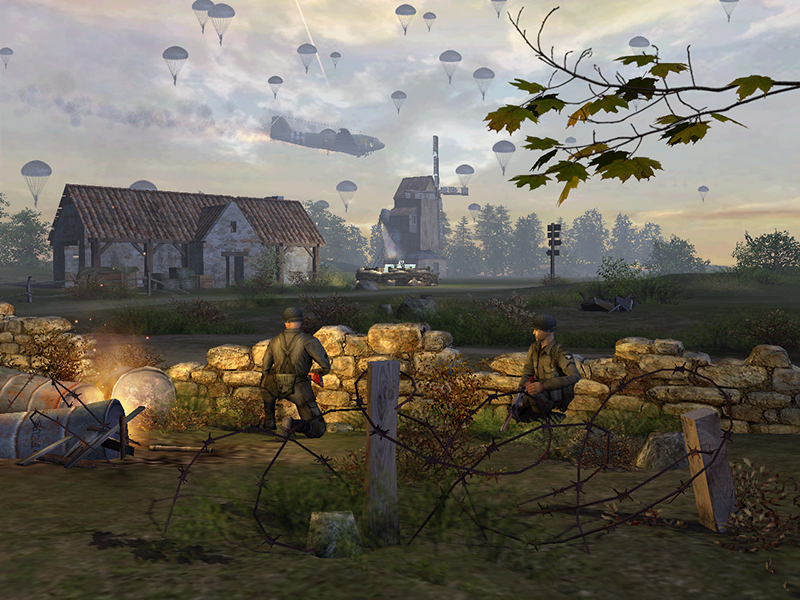
Бойова сцена з Soldiers: Heroes of WWII — Стратегія з прямим контролем юнітів і руйнівним середовищем у сетингу Другої світової війни
GAME DEVELOPMENT

Creating the Technology for a New Type of Tactical Game

Best Way did not wait for existing technology to make its ambitious game possible. The team built the technology the game required.

The Challenge

Best Way was a young team working during the early development of mass-market 3D PC gaming. 3D accelerators were expensive, real-time models often looked far less detailed than handcrafted 2D sprites, and the commercial middleware available to small studios could not provide everything the team needed.

The gameplay concept was not fully concretized either. Best Way wanted to combine tactical depth, physical interaction, and extensive player freedom, but there was no established technological or genre blueprint for such an experience.

Because existing engines could not support the level of interactivity emerging from the game design, Best Way began developing its own technology from scratch. Game and engine development became a single process: gameplay experiments created new technical requirements, while each engine capability opened new gameplay possibilities.

Finding the Game Through Experimentation

Best Way did not begin with a conventional genre formula. The team studied popular real-time strategy games while experimenting with ideas drawn from turn-based games, stealth, role-playing games, tactical simulations, and action games.

The breakthrough came from a deceptively simple experiment: controlling a vehicle’s movement with the keyboard while aiming and firing with the mouse.

Later named Direct Control, this method allowed players to operate a unit personally while remaining within the tactical battlefield view. At any moment, they could move from commanding a squad to aiming a tank gun, driving a vehicle, operating an artillery piece, or controlling an individual soldier.

The mechanic brought the immediacy of an action game into a tactical strategy experience without removing the need for planning and unit management. It became the central design principle of Soldiers and eventually a signature feature of Best Way’s games.

Building Systems Around Player Freedom

Best Way did not want players to be tied to a single scripted solution. Instead of creating only the interactions required by predetermined mission scenarios, the team built interconnected systems from which new tactical possibilities could emerge.

Players could:

  • Use objects and terrain as cover
  • Destroy enemy cover or create new lines of fire
  • Damage individual vehicle components
  • Repair and capture battlefield equipment
  • Recover weapons, ammunition, and other items
  • Move between squad-level command and Direct Control
  • Use terrain, buildings, and level geometry to develop their own tactical solutions

Supporting this freedom required GEM1 to calculate how different systems affected one another. Destruction could alter cover and movement routes. Projectile behavior determined whether a shot penetrated armor or damaged a particular vehicle component. Physical impacts influenced soldiers, vehicles, and environmental objects.

This systemic architecture transformed missions from fixed tactical puzzles into dynamic battlefields where players could discover their own ways to achieve an objective.

Creating Physics and Movement Without Suitable Middleware

The team wanted tanks and other vehicles to move and react with a level of physical credibility that existing affordable solutions could not provide.

Commercial physics middleware was prohibitively expensive, while freely available libraries did not deliver the necessary quality. Best Way therefore developed a hybrid approach combining controlled movement systems with simulated physical reactions.

A pre-calculated trajectory based on static objects (also called locomotion) handled normal movement, while the physics system took over during collisions, impacts, and other physical events.

This approach delivered convincing physical interactions within the technical and financial constraints of the period. The resulting movement, collisions, destruction, and combat reactions became some of the game’s most recognizable qualities.

From Prototype to Production-Proven Game

By the time the public demo was released, the fundamental gameplay, visual direction, Direct Control system, and interactive battlefield were already in place. Players could experience the same underlying model that would later define the commercial game.

Its single mission proved remarkably replayable. Open resources and a data-driven structure also allowed players to begin creating modifications before the full game was released.

The demo helped Best Way validate several important assumptions:

  • The unconventional gameplay model was understandable and engaging
  • Direct Control worked alongside traditional tactical commands
  • Systemic missions supported repeated playthroughs
  • The technology could deliver the intended visual and physical experience
  • Players were interested in modifying and extending the game

The most significant feature not ready for the original launch was multiplayer. Because the technology team was small and the single-player game required significant work, multiplayer arrived several months later with the first major post-release update.

Recognition for Originality and Boldness

In March 2003, the Soldiers demo received the Best Foreign Game award at the International Game Developers Conference. It also attracted the attention of British publisher Codemasters.

When the finished game launched in 2004, reviewers highlighted its visual presentation, interactive environments, destruction, unconventional gameplay, and replayability. Players responded particularly strongly to the freedom to approach objectives in different ways and the ease of modifying game content.

By crossing the boundaries between established genres, Soldiers offered an experience increasingly described as real-time tactics rather than conventional real-time strategy.

The game demonstrated that a small, ambitious team could compete through technological invention and a clearly differentiated gameplay model. Instead of reproducing established conventions, Best Way changed what players could expect from a tactical battlefield.

From a Single Game to GEM1

The technology developed for Soldiers extended far beyond the original game.

Its engine, editors, content pipeline, gameplay systems, and reusable World War II assets became the foundation for subsequent commercial titles. GEM1 was licensed to third parties and used to create the Silent Heroes series, demonstrating that the technology and complete game base could support production by teams outside Best Way.

The principles established during the development of Soldiers continued across later generations of GEM:

  • Direct Control
  • Interactive and destructible environments
  • Systemic tactical gameplay
  • Detailed vehicle and weapon mechanics
  • Physics-driven interactions
  • Open, data-driven game resources
  • Built-in tools for creating missions, maps, and modifications

Technology originally developed for one unconventional game evolved into a reusable platform for new campaigns, standalone titles, sequels, community modifications, and licensed projects.

Restoring a Classic for Modern Systems

Over time, the original GEM1 architecture showed its age. Much of the code was designed around single-threaded processing and could not fully benefit from newer multicore hardware. Compatibility problems emerged as Windows evolved, while the closure of GameSpy and All-Seeing Eye left the game without its original online infrastructure.

In January 2025, Best Way gave the game a new life with Soldiers: Heroes of World War II - Enhanced Edition.

The project brought the original game to modern Windows systems and hardware while preserving its distinctive gameplay. It added widescreen support, resolutions up to 4K, an updated editor, restored multiplayer through Steam, Steam Workshop integration, achievements, and Steam Community items.

What began as an internal attempt to compile the original code in a newer development environment eventually grew into a complete modernization effort. Members of Best Way’s gaming community also helped test and polish the updated version for release.

Replacing obsolete online services, adapting the code to modern systems, and restoring multiplayer more than two decades after the technology was created demonstrated the resilience of the original architecture and Best Way’s continued commitment to the game that started its history.

The Outcome

With Soldiers: Heroes of World War II, Best Way:

  • Created its first commercial game and the first generation of the GEM engine
  • Developed an original tactical gameplay model through experimentation
  • Introduced Direct Control as a defining feature of its games
  • Built advanced physics, destruction, vehicle, visibility, and environmental systems around player freedom
  • Validated its technology and gameplay through a production-ready public demo
  • Established a highly replayable, modification-friendly game structure
  • Created a foundation later used by Best Way and third-party developers
  • Modernized the original game for contemporary platforms more than 20 years after its release

Soldiers represents the moment when Best Way’s gameplay philosophy and technology became inseparable.

The studio began with an ambitious idea for which no suitable solution existed. By building the game and its engine together, Best Way transformed that uncertainty into a distinctive commercial product and created a technological foundation that would continue evolving long after the first battle was over.

Build Your Game with GEM Technology

Interested in developing your own game with GEM technology? Сontact Best Way about licensing

Join our community on Discord

Stay connected

Subscribe to the Best Way Email List
Sign up for our email newsletter to get info on game announcements and updates, details on special events and offers, and more from Best Way and our affiliates
Enter the valid email