



Beyond the Technology: The Value of a GEM RTS License

Game development technology has never been more accessible. Studios can choose from powerful general-purpose engines, extensive asset libraries, community tutorials, and a growing range of AI tools that can quickly generate code, content, and documentation. Increasingly ambitious games can now be created with much leaner teams and budgets.
In this environment, a reasonable question arises: what is the value of licensing a specialized engine such as GEM RTS?
The answer begins with the technology itself, but it does not end there.
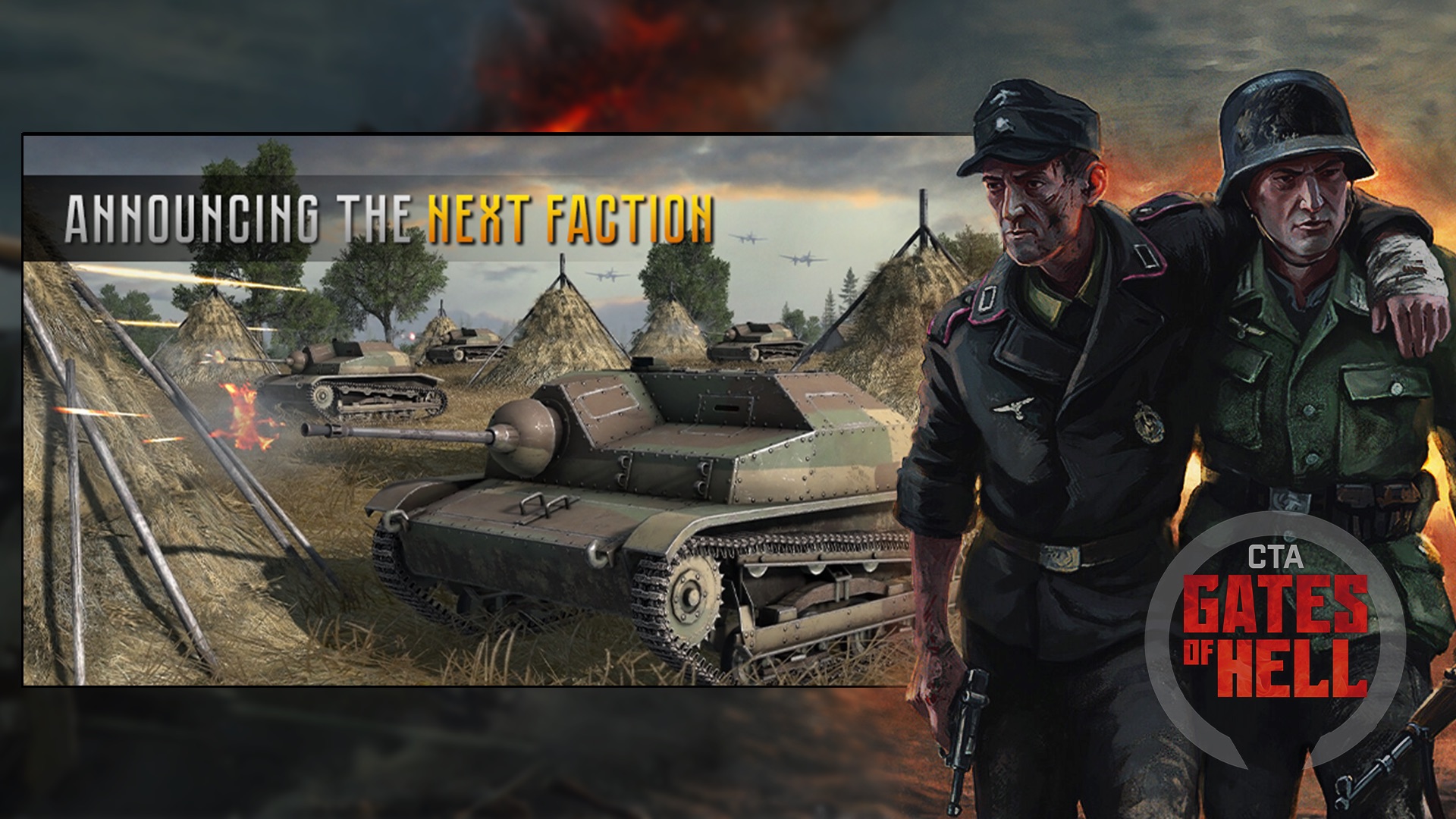
A GEM RTS license provides the legal rights and technological foundation required to build and release a game with the engine. Depending on the licensing terms, this may include access to the engine, development tools, SDK, documentation, or source code. These are concrete assets backed by decades of development and a track record of commercial releases. Call to Arms - Gates of Hell alone reached one million copies sold in November 2025.

Beyond the technology, another advantage is harder to package or reproduce: the accumulated experience of the people who built it and understand why it works the way it does.
What Cannot Be Copied as Easily as Code
As Kevin Kelly argues in “Better Than Free” when digital copies become abundant, value increasingly shifts toward qualities that cannot simply be duplicated, including interpretation, trust, and human judgment.
Engine code can be transferred. Documentation can be downloaded. An SDK can be installed. AI can help developers navigate unfamiliar systems, explain individual functions, create prototypes, and accelerate routine tasks.
But none of these automatically provides the judgment developed through years of building, testing, shipping, supporting, and rethinking games on the same technological foundation.
For GEM RTS, that accumulated knowledge includes:
- an understanding of the engine’s architecture and the reasoning behind it;
- experience applying its systems to different game designs and production conditions;
- a tested production pipeline;
- practical knowledge of what can be adapted and where new development may be required;
- the ability to identify technical constraints before they become expensive production problems;
- and the accountability of the team that has developed the technology for decades.
This expertise does not replace the licensee’s team. It helps developers make better-informed decisions about where to invest their time and engineering capacity.

From Engine Access to a First Playable Result
A feature list is useful, but a publisher or studio ultimately needs to know how quickly those features can produce evidence that the game works.
Can the team validate the core gameplay loop?
Can the engine support the intended number of units, environmental interactions, networking model, and content pipeline?
Which systems are already available, which need modification, and which must be developed specifically for the project?
GEM RTS reduces the amount of foundational technology that must be built from scratch. It provides a base shaped by the demands of real-time strategy and tactical games. Best Way’s experience can help a partner assess how that foundation fits a particular concept and identify a credible route to a prototype or another meaningful production milestone.
The goal is not to eliminate development work. No engine can do that. It is to focus more of that work on the features and decisions that make the game distinctive.
A Technological Base, Not a Universal Template
General-purpose engines support a wide range of genres and production models. Their flexibility is a major advantage, but a studio may still need to assemble, adapt, or build many of the systems required for a complex RTS.
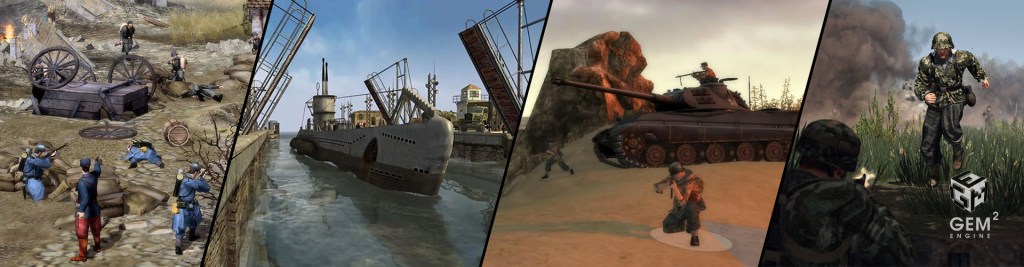
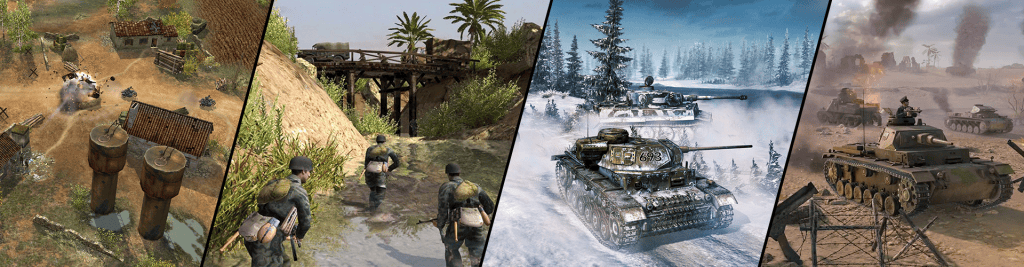
GEM RTS starts from a different position. It is a specialized RTS game engine created through the development of strategy games featuring interactive environments, large numbers of independent units, complex battlefield behavior, Direct Control, physics, ballistics, destruction, multiplayer systems, and content-creation tools.
The license does not require a studio to reshape its concept around a rigid collection of established features. Its value lies in determining which proven systems can support the new design, how they should be adapted, and where the project requires original engineering.

Best Way’s development history demonstrates this flexibility. Soldiers: Heroes of World War II established the technological and gameplay foundations of the series, including Direct Control, detailed ballistics, interactive environments, individual inventories, and vehicle repair and capture. Faces of War retained key principles while expanding the scale of combat and introducing new approaches to graphics, physics, unit behavior, and troop control.
The same technological lineage supported different design priorities. A proven foundation moves the starting point forward without predetermining the destination.
Documentation Explains How. Experience Helps Decide What Comes Next.
Good documentation explains how systems work, how tools should be used, and how common production tasks can be completed. AI can make that information easier to search, summarize, translate, and apply.
However, the most consequential technical questions are often not procedural:
- Why was a system structured this way?
- Which dependency can be changed safely?
- What appears simple in a prototype but becomes costly at production scale?
- Which limitation should be engineered around, and which justifies modifying the engine?
- How will a technical choice affect designers, artists, multiplayer performance, mod support, or future updates?
These questions require context. Access to specialists who understand the engine’s history can shorten the path from understanding how a component works to deciding what is right for the game.
Reducing Risk by Finding It Earlier
No technology partner can promise a risk-free game project. Game development is inherently uncertain, and a license cannot guarantee creative, technical, or commercial success.
What a specialized technology base and experienced technical collaboration can do is reveal some risks earlier. An architectural review, technical evaluation, or focused prototype can test critical assumptions before full production. A team can explore performance limits, content workflows, multiplayer requirements, or the feasibility of a central mechanic while changes are still comparatively inexpensive.
Discovering that a system requires substantial custom development is not a failure if it happens early enough. It gives the studio better information for planning scope, budget, staffing, and milestones. The value is not a promise that problems will disappear, but the opportunity to identify the right problems sooner.
The Role of AI: Greater Speed, Greater Need for Judgment
AI can already help write and review code, generate drafts and assets, explain unfamiliar systems, organize documentation, and accelerate experimentation. These capabilities will continue to improve.
Greater production speed, however, does not remove the need to decide what should be built, how its parts should fit together, which compromises are acceptable, and who takes responsibility for the result. When more alternatives can be generated more quickly, careful selection and human judgment become even more important.
The scarce resource may no longer be the ability to produce another technical option. It may be the ability to choose the right option for the intended player experience, production reality, and long-term future of the project.
This is where accumulated expertise, reputation, accountability, and trust retain their value. AI can help a team move faster. Experienced specialists can help it move in the right direction.
A License and a Partnership Are Not the Same Thing
It is important to distinguish two related forms of value.
First, a GEM RTS license grants specific legal rights to use the technology under agreed terms. It provides the legitimate basis on which a commercial project can be developed and distributed.
Second, Best Way may provide additional services such as technical consultation, developer support, training, engine adaptation, or co-development, depending on the chosen cooperation model. These services are not automatically included in every license; their scope must be defined for each partnership.
The technology therefore has value in its own right. Collaboration adds another layer: access to the people who know how to shape it around a specific game.
Technology for the Game You Actually Want to Make
The strongest reason to license a specialized engine is not simply to acquire a collection of features. It is to begin a difficult project from a more informed position.
GEM RTS can reduce the amount of foundational RTS technology a studio must build from scratch. Working with Best Way can help the team understand how to apply that foundation, where to adapt or extend it, and which risks to test before production scales.
GEM RTS provides the technology to build an RTS game. Working with Best Way adds the experience to shape that technology around the game you actually want to make.
In an era of universal engines, abundant digital tools, and increasingly capable AI, the value of a GEM RTS license lies in this combination of legal access, specialized technology, accumulated judgment, and accountable human collaboration.
Ready to Build Your RTS?
Interested in developing an RTS game with GEM RTS?
Contact us to explore what the engine can offer your project, how it can be adapted to your vision, and how quickly your team could reach its first playable build.


